Czech Republic

Czech Republic -- March 2013

I went to Prague for a weekend conference. It gave me an opportunity to walk around that beautiful city. Along with seeing all the beautiful sights, I managed to catch the ringing of the Astronomical Clock, which features the "Walk of the Apostles". Pretty cool.


As part of the conference, we held a ball at Lobkowicz Palace, part of the imposing Prague Castle, the world's largest. It gave me a chance to dress up a spot. The sparkling lights of Prague's city center are visible over my left shoulder.


Canary Islands

Canary Islands -- February 2013

For winter break, I flew with RyanAir (via a circuitous route, involving stops in Frankfurt, Milan, and London) to the beautiful, warm Canary Islands. I flew into Gran Canaria and based myself in Las Palmas. The islands are beautiful, and a perfect destination for a wandering tourist like myself.


I took a bus to the island's interior and spent a day and a half hiking along the Camino de Santiago that has been establish on the island. The trail markings were rare, but the walking was superb -- albeit wet.


During the second half of the week, I took a ferry to the volcanic island of Lanzarote, where I explored Arrecife and took a day trip to the beautiful island of Graciosa. La Graciosa is largely nature reserves, but a series of foot- and bicycle-paths allows visitors to get around the island. The beaches on this island were probably my favourite.


Svalbard

Svalbard -- December 2012

I spent the winter solstice in Longyearbyen, a community of about 700 people on the northern Norwegian island of Svalbard. The sun doesn't rise for a couple months during the winter, and around the solstice the daytime is no brighter than the night (below, Nybyen at noon).


I went to Svalbard to attempt to capture a 24-long-time star trail. Unfortunately, the weather didn't cooperate, and the longest period of cloudlessness was only about 10 hours long.


Svalbard's great mammal inhabitant is the polar bear. The one below I met at the (fantastic) town museum.


My favourite part of Svalbard was the fantastic stories attached to the place, including explorers like Andrée and Nansen, and the man-against-the-world trappers who braved the frigid cold and desolate loneliness for a life on the edge. Longyearbyen is a surprisingly well-developed town -- I'd certainly go back.


The Netherlands

The Netherlands -- October 2012

For a weekend, I took a cheap flight to Amsterdam. My sisters were traveling though the city, and it was great to spend a couple hours with them. I also visited the Rijksmuseum and the Van Gogh House, the latter of which is one of the best art museums I've ever visited: Amsterdam cool, understated, and full of fantastic art. However, the best part was just wandering around the canals of that city.


Caucasus

Caucasus -- October 2012

For my autumn break, I flew to Tbilisi for a week of fun in the Caucaus: Georgia, Armenia, and Azerbaijan. My first, and most anticipated, destination was the village of Kazbegi, in the north of Georgia. Microbus transport in Georgia is popular but, as you might expect in a mountainous country, terrifying.


The Kazbegi area is famous for Tsminda Sameba, a church perched on a beautiful hill overlooking the village. It is, perhaps, the most photogenic location on Earth.


Kazbegi is also the launching-off point for mountaineers who wish to climb Mt Kazbegi, the second-tallest peak in the Caucasus mountains. The climb is manageable for a fit person: you'll need crampons or an ice axe to make it across a glacier to the base camp (although you can scramble across in hiking boots if you're brave). Georgia's a fantastic destination for anyone with a penchant for hiking and stunning vistas.


After a day exploring Tbilisi's old city and ridiculous new architecture, I took an overnight train south to Armenia. Yerevan, the capital, is a bustling, exciting city. I was hoping to visit the Matenadaran, but unfortunately arrived too late in the afternoon. I spent much of a day at the Khor Virap Monastery in the south of the country. The ancient religious center has a delightful history, and is located perilously close to the Turkish border (top right in the picture below).


Because of the taut political situation between Armenia and Azerbaijan, it's impossible to cross the border between those two countries, so I headed back to Tbilisi to catch a train to Baku. Caspian Sea oil has made Azerbaijan rich, and Baku bears many similarities to the oil capitals of the Middle East. The old city was a bit too touristy for me, but I found serenity by tracking down the childhood home of prominent Soviet physicist Lev Landau.


My final destination was Nakhchivan, a province of Azerbaijan trapped between Armenia, Turkey, and Iran. It was not a great choice. In addition to being at the center of the Armenia-Azerbaijan conflict, with corresponding paranoia and police-state mentality, and being basically unequipped for even basic tourism, Nakhchivan is probably pursuing a programme of archeological cleansing, and the local people and police seemed quite concerned about a Westerner walking around unsupervised.


Advice: In addition to being an amazing destination, Georgia doesn't require a visa for citizens from many countries. Armenia and Azerbaijan, on the other hand, both require a visa. And don't go to Nakhchivan.

Lithuania

Lithuania -- August 2012

After visiting Estonia, we swung down through Latvia's southern neighbour. We had two primary destinations. First, we went to Siaulai, home of Lithuania's famous Hill of Crosses. There's a great story beyond this spectacular Catholic site, which is home to hundreds of thousands of crosses of all size, colour, and age (image from wikipedia by Wojsyl).


Next, we traveled by bus to Lithuania's port city of Klaipeda, the typical jumping-off point for visiting the Curonian Spit. Klaipeda's a decently pretty city, but the highlight was spending the day casually cycling back to the Klaipeda ferry from Nida, near the Russian border (image from flickr by Thomas Hill).


Estonia

Estonia -- August 2012

Two good friends visited this month, so we packed up for a few days in Estonia. We took a bus to Tallinn, where we spent a day and a half exploring that beautiful city. While Riga is a flat, riverside city, Tallinn's old town sits on top of a hill, so the cities are different enough in character to make them interesting. We happened upon a delightful courtyard of galleries and artisans, and looked at cannonballs still embedded in Kiek in de Kok Tower (image from Wikimedia by Vladi Stoichkov).


The second half of our trip took us to Saaremaa, a beautiful island off the western coast of Estonia. I was able to drag my friends along on a solid day's hike in a wilderness reserve on the northeast coast. We also did some cycling around Kuressaare, the capital (image from Flickr by trepeshchenok).


Advice: Saaremaa is beautiful, but getting around is difficult without a car. Tallinn has something for everyone. I haven't been yet, but I've been told that the city of Tartu has a fantastic science museum.

The Holy Land

April 2012 -- Israel and Palestine

During a school break, I took a flight to Tel Aviv for a few days of exploration. I passed through the town of Nablus and visited the Qalquilya Zoo, strolled up to the Samaritan village on Mount Gerizim, and shopped at the souq in Nablus (image below from Wikimedia by Tiamat).


I caught a bus to Jerusalem, where I spent a couple days in that marvelous city. The density of religious sites is almost as unbelievable as the ease of accessing them... subject to a few restrictions (image below from Wikimedia by Shmuel Spiegelman).


I wrapped up by spending a couple days in sunny Tel Aviv. It seems like a great place to live, and I loved the breakfast options, but everything seemed a bit stale after Jerusalem.

Advice: Be respectful when visiting religious sites, play by the rules when it comes to traveling into and out of Palestine and through Ben Gurion, and visit Jerusalem.

Physics Tour

June/July 2012 -- A Physics Tour of Northern Europe

Growing up, my heroes were Albert Einstein and Neils Bohr and Marie Curie: larger-than-life figures known in the popular zeitgeist, not for their particular contributions to science, but for the vague understanding that they had done Something, and that whatever that Something was, it had changed the world more surely than the contributions of easily-understood figures like Winston Churchill and Pierre Trudeau and Tommy Douglas.


So, faced with a summer vacation, I set off, by any means available and with a knapsack full of biographies, to visit the hometowns, museums, and sites of inspiration of my childhood heroes.

Warsaw, Poland - Childhood Home of Marie Curie

Most accounts describe Marie Curie as a fiercely patriotic Polish nationalist. I have my suspicions -- her husband Pierre was strongly opposed to nationalism, and Marie never returned to Poland late in life -- but there is no denying that Marie Curie, born Maria Sklodowska, is a product of Warsaw's great turmoil in the second half of the 19th century (image below from Wikimedia).


I visited the Marie Curie museum in Warsaw. It's a charming place, large enough to keep class of high school students busy for about 20 minutes. I liked both the personal effects, like one of Marie's signature black dresses, and a collection of experimental apparatus. The best biography is Marie Curie: A Life by Susan Quinn.


Frombork, Poland - Home of Nicolaus Copernicus

From the gorgeous town of Gdansk, infrequent public transit can deliver you to the historically-significant village of Frombork. It was while he was a canon at Frombork that Copernicus wrote De Revolutionibus Orbium Coelestium (usually translated as On the Revolutions of the Heavenly Spheres), the work that proposed a heliocentric universe and, it is widely believed, kick-started the scientific revolution. The tremendous Frombork Cathedral is open to the public, and is the town's main tourist destination.


Copenhagen, Denmark - Home of Neils Bohr

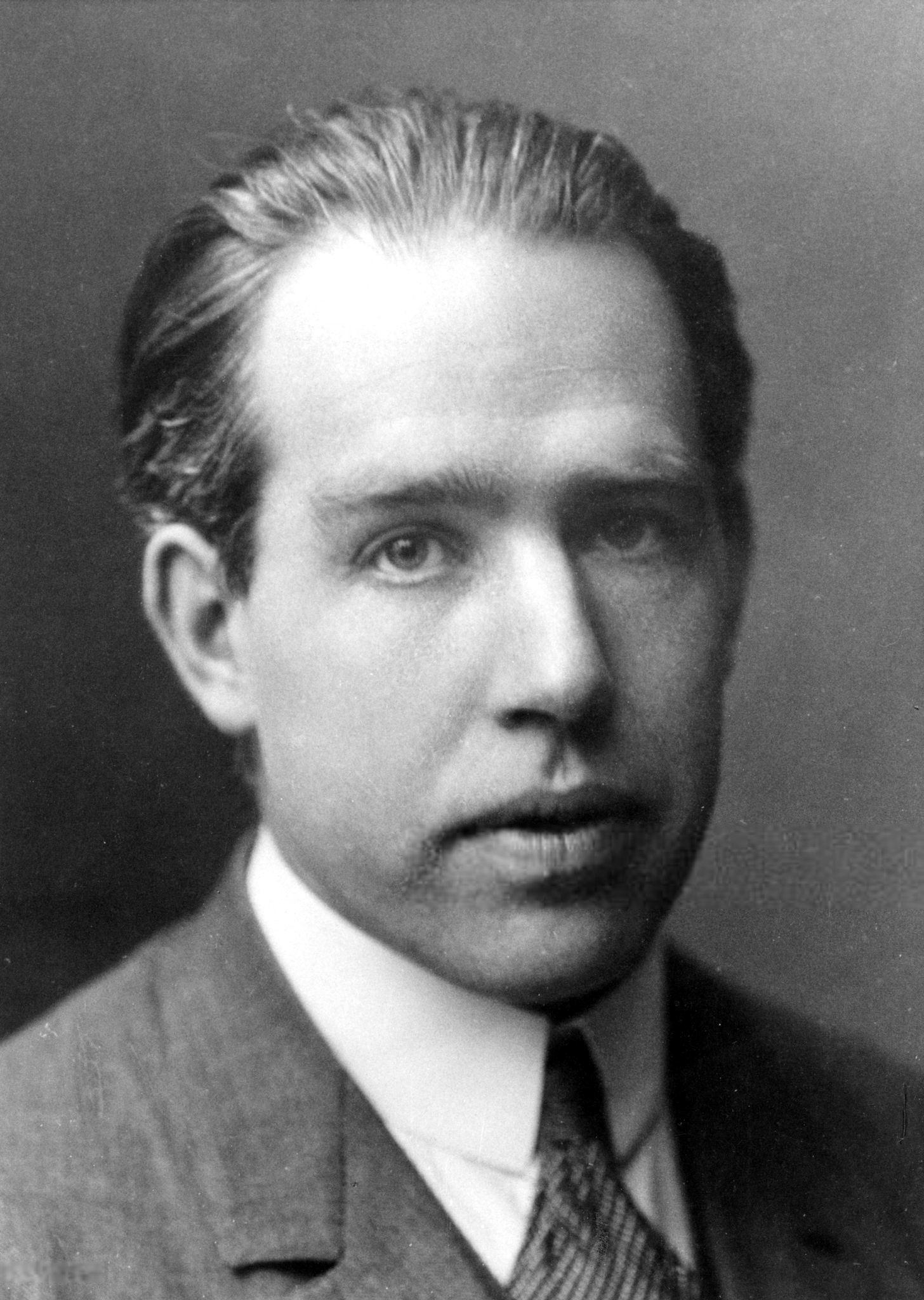
Neils Bohr is sometimes labeled as Denmark's most famous son, and it is difficult to overstate the role he had on the development of physics during the first half of the 20th century. His research contributions were first-rate, the institute that bears his name remains a world center of physics research, and he exemplified compassion in reaching out to help those trapped in Germany during the Nazi regime (image below from Wikimedia, from AB Lagrelius & Westphal).


Abraham Pais' biography, Neils Bohr's Times, is the definitive account of Bohr's life and work. For me, the highlight of my visit to Copenhagen was the opportunity to walk around the Faelledparken, the park behind the Neils Bohr Institute where Bohr and his guests famously strolled as they discussed developments, from quantum theory to nuclear fission to politics.


Ven, Sweden - Island Observatory of Tycho Brahe

Brahe was the benchmark fascinating aristocrat astronomer. He was a talented observer and designer of astronomical measuring instruments. In 1576, he was granted the island of Hven (now Ven) to build an observatory and mansion, which he named Uranienborg (image below from Wikimedia).


Ven hosts the remains of Uranienborg, including a full-size working quadrant and sextant. Ironically, although he was staunchly anti-Copernican, Brahe's meticulous observations were used by his successor, Johannes Kepler, to conclusively show that the solar system is heliocentric, and that the planets follow elliptical orbits. This would have been a double-blow for Brahe, who venerated the classical conception of circular perfection in the heavens, so it is perhaps fortunate that he died from a ruptured bladder after "holding it" for too long at a formal dinner.


Kungalv, Sweden - Lise Meitner's Christmas Insight

Lise Meitner, perhaps Germany's brightest theoretical physicist, was born into a Jewish family in Austria, so the 1938 Anschluss meant she had to leave, and quickly. With the help of Dirk Coster and Adriaan Foster, she was able to escape to the Netherlands and, eventually, settle in Sweden. During the Christmas holiday of 1938, Meitner and her nephew Otto Frisch stayed with friends in the sleepy village of Kungalv, about 20 km north of Gothenburg.


It was there that Meitner first understood the process of nuclear fission. Tragically, the Nobel Prize for this work went not to Meitner, but to her male collaborator Otto Hahn. I suggest Ruth Sime's Lise Meitner: A Life in Physics for more information. The hotel at which Meitner stayed is still running. If you go, ask at the desk for directions to the plaque on the house of Meitner's hosts during that Christmas holiday.


Helgoland, Germany -- Werner Heisenberg's Allergy Relief

In 1925, suffering from a attack of Hay Fever, the German physicist Werner Heisenberg retreated to the tiny island of Helgoland, 3 hours sail off the northwest coast of the German mainland. With his head clear, he was  finally able to formulate the mathematically-complex quantum theory with which he has been wrestling. Heisenberg's ambiguous involvement with the Nazi atomic bomb effort makes him a shadowy historical figure, but his contribution to the field of quantum physics is unquestionable.


Helgoland is frequented primarily by those who seek its duty-free shops, but it is certainly an island worth visiting for the ambiance of sharp cliffs plunging into the cold North Sea. If you go, the Haus der Jugend youth hostel is your budget accommodation choice, but be sure to book in advance.


Gottingen, Germany - Emmy Noether and Everyone Else

The history of German physics is punctuated profoundly by the impact of Nazism. Many brilliant scientists were forced to leave the country because of their ethnic or religious background, political stance, or gender. Emmy Noether's contributions to mathematical physics are probably incomparable, yet she was forced to flee in 1933. I went to Gottingen hoping to find a copy of her doctoral thesis in the library, but it was kept under lock and key, and inaccessible to a tourist like myself. While many of the places I'd visited embraced their unique history, the University of Gottingen seemed unwilling to do so. For an institution with such a legacy, it's surprising that the physics institute lacks statues or icons. I didn't stick around (image below from Wikimedia, from Daniel Schwen).


Bern, Switzerland - Einstein Museum

There's no scientist more famous than Albert Einstein. That his name is a household synecdoche for "genius" is, I think, a deserved honour. Einstein's fame comes from his invaluable contributions to science, but also from his courageous moral stances, including his support for Zionism and his strong opposition to nuclear armament (image below from Wikimedia).


The Einstein Museum in Bern is a world-class institution, and unquestionably worth a visit. I found some aspects of the exhibit a little too focused on the culture of the times, and there was scant discussion of his physics, but that's likely a wise sacrifice for the general public. Abraham Pais' other great biography, Subtle is the Lord, is the best account of the life and work of Albert Einstein.


Genera, Switzerland - CERN

The European laboratory for nuclear research is located on the outskirts of the beautiful metropolitan city of Geneva. This is a town in which it is easy to feel you are too poor to belong, which isn't far off from the truth if 30 Euros a night for the town's cheapest hostel feels steep. Fortunately, the town's efficient trams will deliver you directly to CERN's main entrance.


The round building in the background is The Globe, a science outreach center. The visitor center across the street has a comprehensive and interesting history of CERN's work and major discoveries. Of course, the real science is happening hundreds of meters underground, and tourists cannot get too close to the facilities without a pre-booked tour. Be sure to schedule your tour several months in advance for the busy summer months.


Advice: What sustained me through this trip was the combination of reading and visiting. Seeing the plaque in Kungalv was an emotional moment for me, because I had already developed a strong attachment to Meitner's story. If you've got some time, a bit of cash, and a penchant for travel, consider constructing your own themed tour. And if you're thinking about doing a science-themed trip, write me -- I'd love to hear about it, and might be able to offer some useful pointers.

Spain

October 2011 -- On the Camino with Dad in Northern Spain

My father was undertaking a post-retirement hike on the Camino de Santiago, so I flew to Spain on a week off to catch up and walk with him for a few days. I spent the first and last days in Madrid, where the highlight was the beautiful collection at the Museo del Prado. But as vibrant as Madrid is, I preferred the serene towns of the country.


I met Dad near Ponferrada, in a pretty village called Villafrana del Bierzo. It was a bit touch-and-go for a couple hours: we'd agreed about a week before to meet at the bus stop, but I had no way to know whether he'd kept to his schedule, and he had no way to know whether I'd caught my flights and buses. Ultimately, we met in the village plaza -- it turned out there were two bus stops.


My father and I walked together for three fantastic days. Our second night was at O Cebreiro, a gorgeous but drafty antique town guarding the entrance to Galicia.


I left my father in Sarria. He finished the Camino with a rainy dash into Santiago de Compostela and a peregrino service at the cathedral.

Advice: Some time in your life, take a month off and hike the Camino de Santiago.

Latvia

August 2011 -- A New Home: Latvia

After four years in Mongolia, I moved to Latvia to work at a school on the outskirts of Riga. The Baltics -- and Latvia in particular -- are beautiful. I love living among trees and flowers and rivers. Riga is a young city, with plenty of culture, both traditional and newly-found. The old city (Vecriga) has cobbled streets and plenty of churches, including many that survived centuries and wars.


Upon arriving, I took a bicycle trip up the coast, from Riga north to Cape Kolka, then south through Ventspils to Liepaja. The latter two cities are both nice: the former has a planetarium, and the latter is known for its beaches and a temple to partying named after Louie Fontaine. I also made a trip to Rundale Palace, a beautifully-restored and -maintained manor of inconceivable opulence.


Advice: Riga and Liepaja both have good hostel and hotel options, and couchsurfing is pretty popular if that's how you travel. A day spend walking around Cesis or Sigulda would be well-spent.

South Korea

July 2010 -- A Trip with Students to South Korea

During the summer of 2009, I'd scheduled an 8-hour stopover in Seoul with five students on the way to a summit in New York. It was just enough time for a tour of that beautiful city, and I resolved to return.


With another group of students, I attended the Asian Debate Institute in the summer of 2010. It was a great workshop/tournament -- surely one of the best such events in the world -- and it offered us a superb introduction to Korea.

The countryside (that which hasn't yet been urbanized, in any case!) is complex and calm, while a morning commute on Seoul's metro was simple but hectic. The shopping districts are tremendous stomping-grounds of Korea's unique trend-setters and trend-suggesters. We took a day-trip to a beach near Incheon (the island that hosts Seoul's primary airport). My favourite part of Korea, however, is the food: Korean barbeque, kimchi, bulgogi, and bibimbap are words that make my stomach rumble. I also had the sannakji, raw octopus: less impressive.

Advice: We stayed at Mr Sea's, a backpacker hostel. The location wasn't bad (and transportation around Seoul is so easy with the metro) but the place was cramped and the singular bathroom was in high demand. Be sure to devote at least an afternoon to quiet meditation at one of the country's many monasteries. And, if you're the sort to enjoy this sort of thing, take a tour to the de-militarized zone (DMZ) with North Korea.

Qatar

February 2010 - A Trip with Students to Qatar

I took the Mongolian delegation to the 2010 World Schools Debate Championship in Doha, Qatar. We spent most of our time buried in preparation and debating, but managed to get enough time to explore a strangely-clean souq and take a tour of the harbour on a dhow. We attended a superb outdoor performance of Beethoven's 9th, with the crown prince in attendance. The students had a great time when we drove out into the desert for an evening under the stars (I made a fool of myself surfing down dunes).


My favourite part of the city was the family-centered nature of the wealthy Islamic state. Rapscallions and fairies ran around underfoot everywhere. Single men are not welcome in shopping malls or parks on certain days so mothers feel more safe with their children. Everything seemed designed with children in mind, like the entire city was a schoolyard.


Advice: The Gulf shouldn't be a draw for the backpacking crowd, so if you're going to Doha, you're probably (a) on business, or (b) the sort of person who does everything on business. In any case, try to get out of the city for some testosterone-fueled fun in the desert.


Mongolia

August 2007 -- Four Years in Mongolia

I flew to Ulaanbaatar, Mongolia, to take up a year's contract at the Hobby School. I ended up staying for four years, until June 2011. Ulaanbaatar (background, below) is a rapidly-growing city, hemmed in by mountains and, to a lesser extent, the river that created the flood-plain on which it sits.


During the winter, Ulaanbaatar is suffocated by smoke. A large disenfranchised segment of society lives in traditional felt dwellings (gers) and burn coal and wood to heat their homes during the winter. The surrounding mountains create a temperature inversion, trapping the air pollution in the valley. Consequently, my favourite wintertime activity was escaping the city for hikes in the nearby mountains, particularly the Bogd Khan Uul to the south.


Mongolia's vast tracts of uninhabited countryside, however, are best enjoyed during the summer. My favourite destinations included the eastern Gobi desert, the forested north of the country, and the garden-y central province of Arkhangai. Closer to Ulaanbaatar are the forests of Khentii, which can be accessed through Terelj park (accessible by twice-daily bus from downtown Ulaanbaatar) and via the Batsumber region, which lies about 200 km north of Ulaanbaatar along the railroad.


While most Mongolians seem intent on shedding their nomadic history, trekking through the country provides plenty of reminders that this is an old land, inhabited for unknown time. Ovoo, rock piles usually found on passes and hilltops, and prayer-flags are ubiquitous.


Advice: Visitors to Mongolia will either arrived via the trans-Siberian railway or by flying in to the Chingis Khan International Airport. Getting from the airport to the city is tricky, as you'll almost certainly end up taking a taxi. Agree to a price in advance -- it should be 10 000 tugrig, but who knows? I love Ulaanbaatar, but it's very much an acquired taste: you'll probably find yourself bored after two or three days. Gandan monastery, the Winter Palace, and the National and Natural History museums are worth visiting. Trips outside of Ulaanbaatar will need to be planned in advance, if you can afford it. The cheap approach is to fight for a seat on one of the buses to provincial towns, but although you'll be getting out of Ulaanbaatar, you'll miss the major attractions, which cannot be visited without (expensive) private transportation.